For homes
We handle mold in houses, condos, and rentals across Phoenix. You get containment, removal, treatment, and a written summary for your records.
- Slab leak under flooring
- Swamp cooler closet moisture
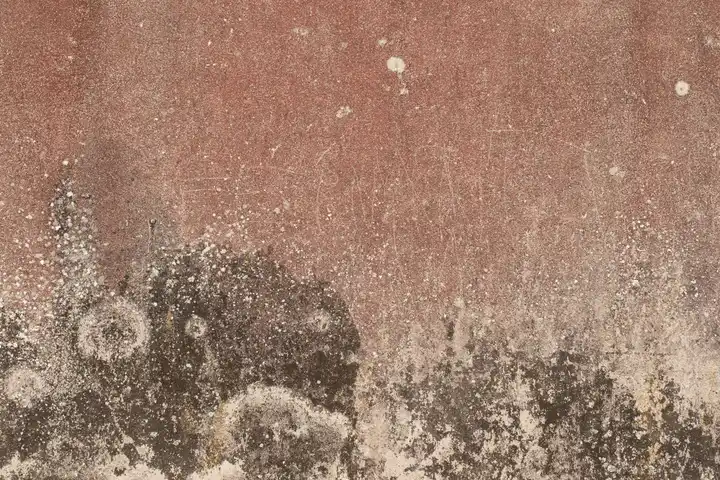
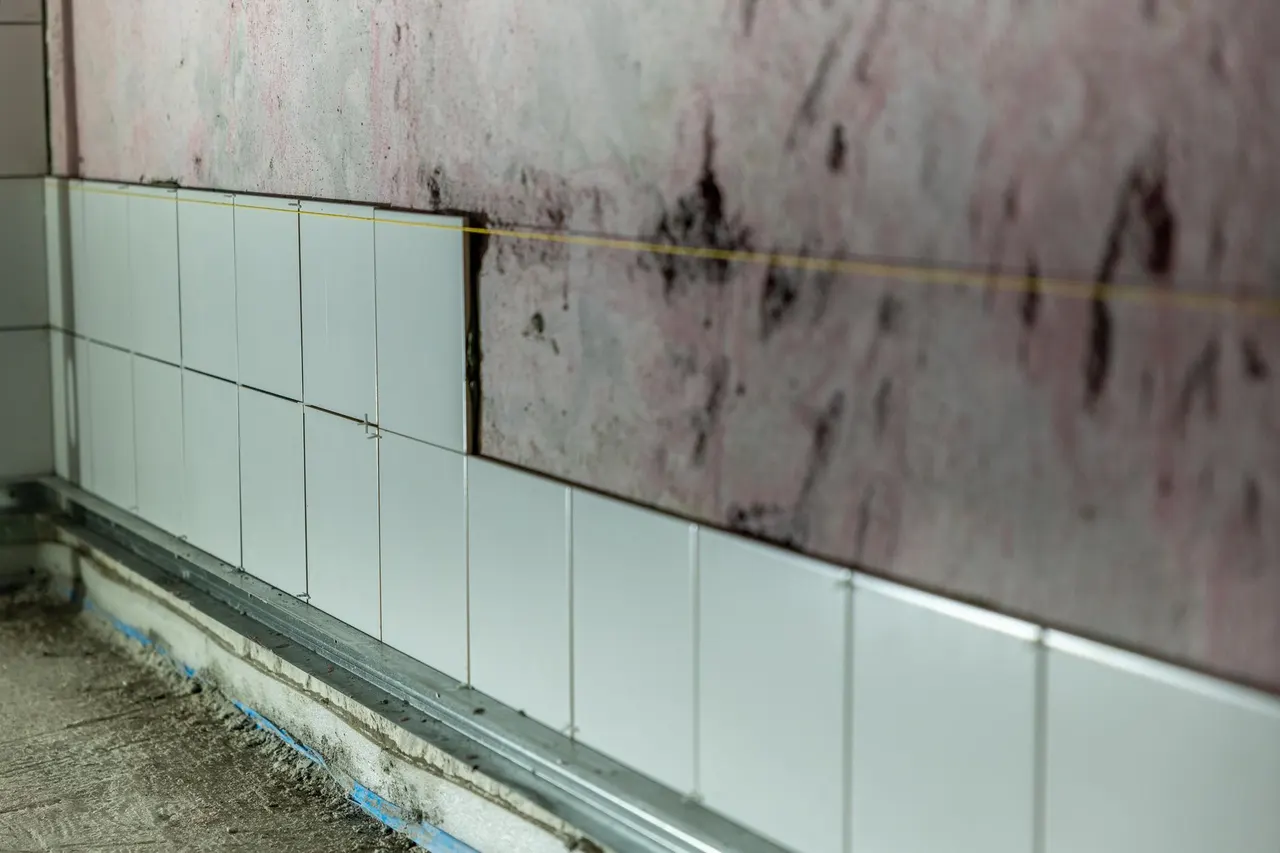
- Bathroom wall growth
When a slab leak, monsoon intrusion, or swamp cooler overflow soaks your home, Emergency Mold Removal in Phoenix stops the spread before it reaches your HVAC or attic. Call and we will walk you through shutting off water and isolating the room while a crew heads your way.
 Moisture mappingContainment setupClearance photos
Every emergency job includes assessment, containment, removal of affected material, treatment, and documentation. What changes is the size of the work zone and how much material has to come out. Here is what you can expect us to cover, and what we will tell you upfront if your job needs something beyond the standard scope.
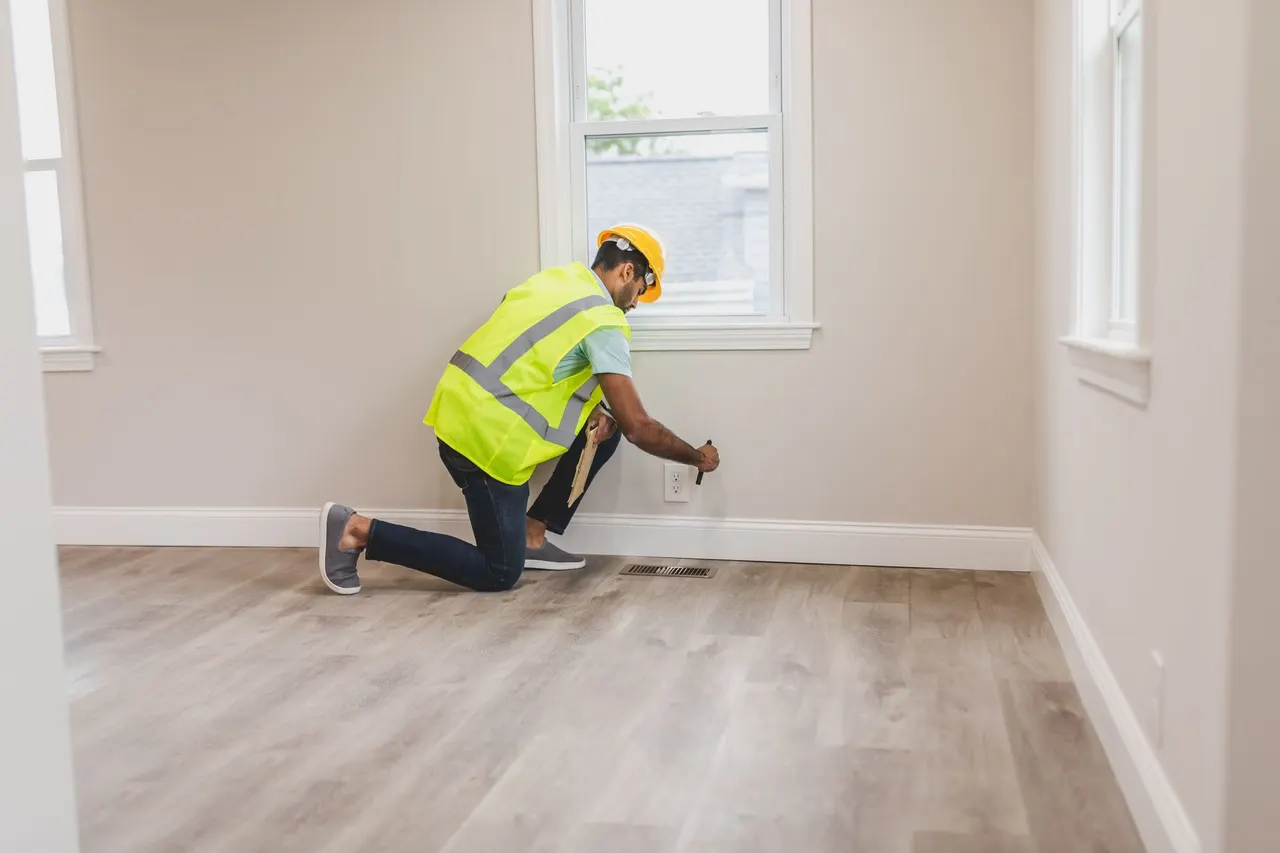
We use a moisture meter, thermal imaging camera, and boroscope to find where water traveled and where growth is hiding. You get a plain explanation of what is wet, what is growing, and what has to come out before we start cutting.
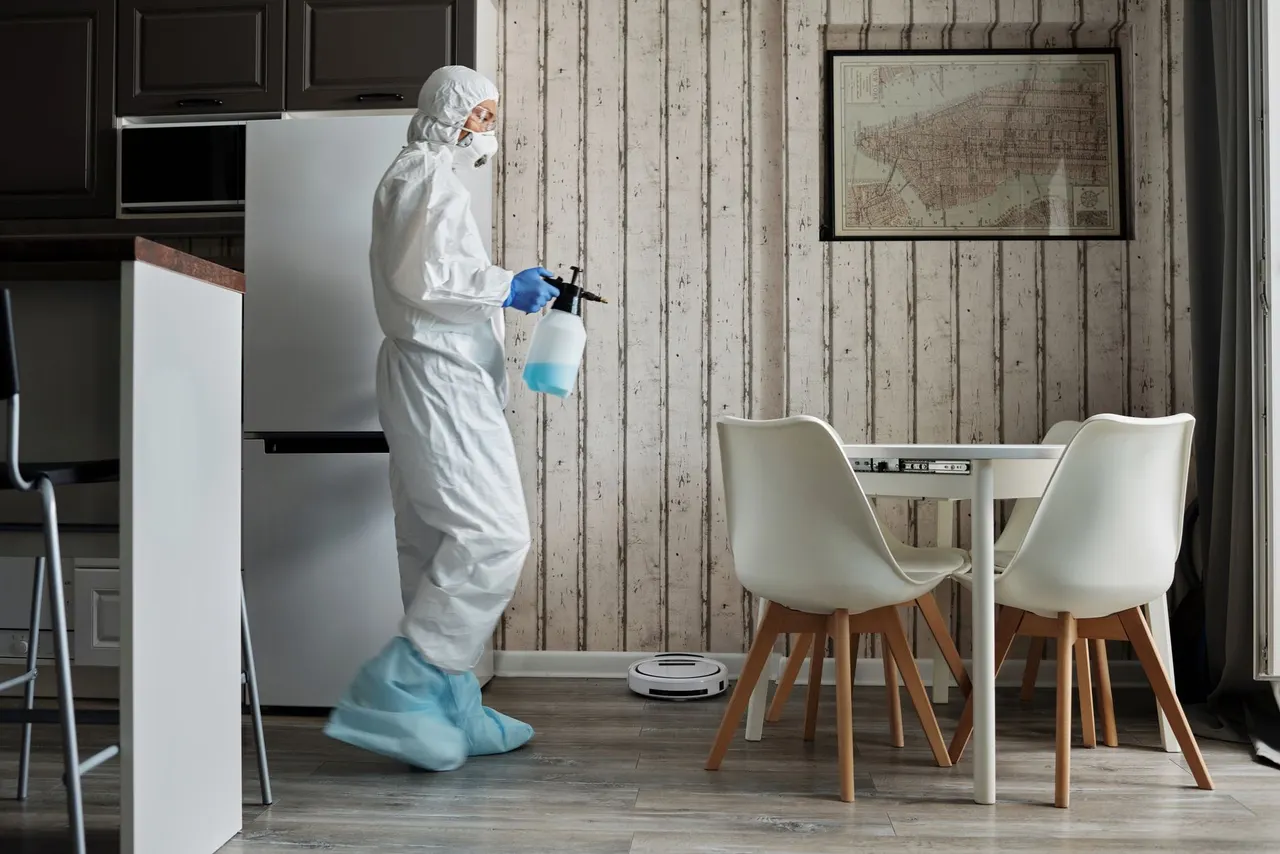
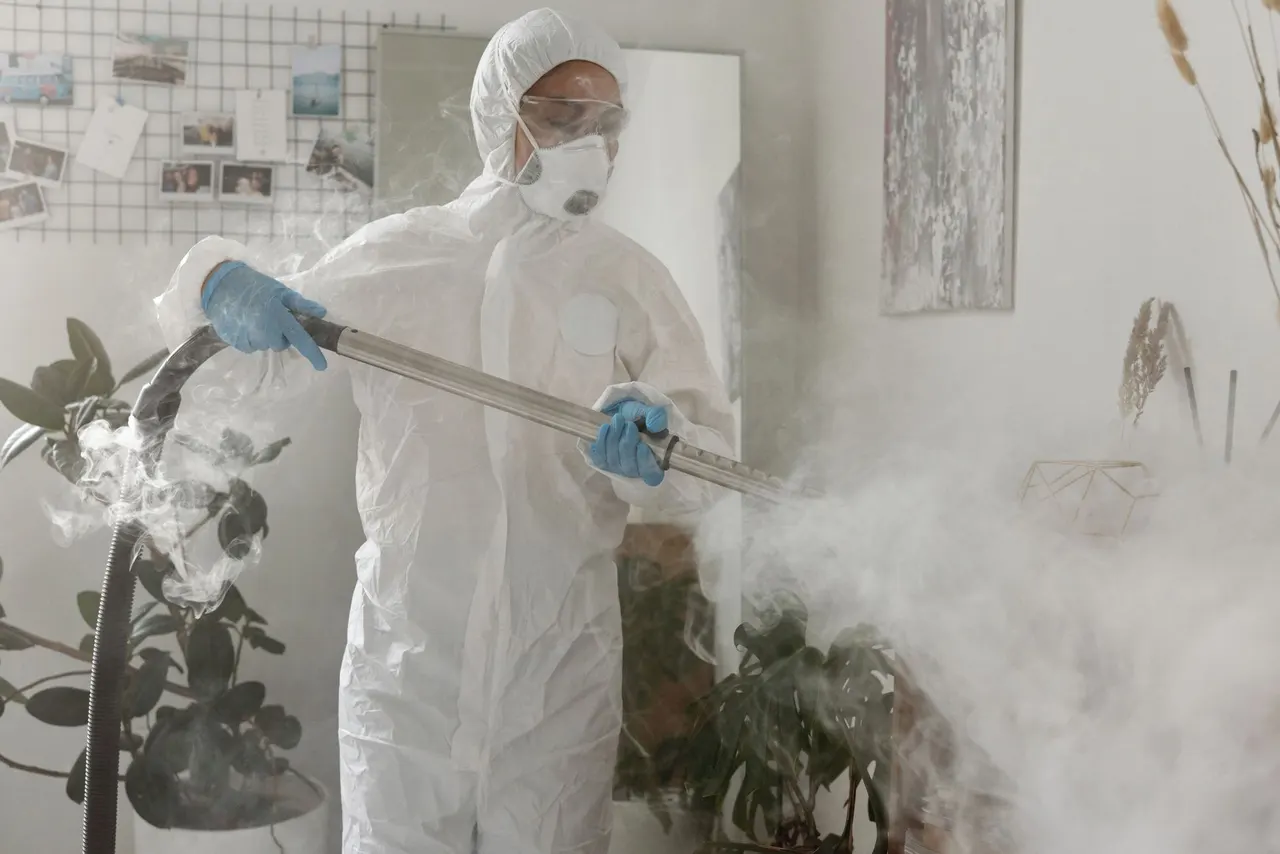
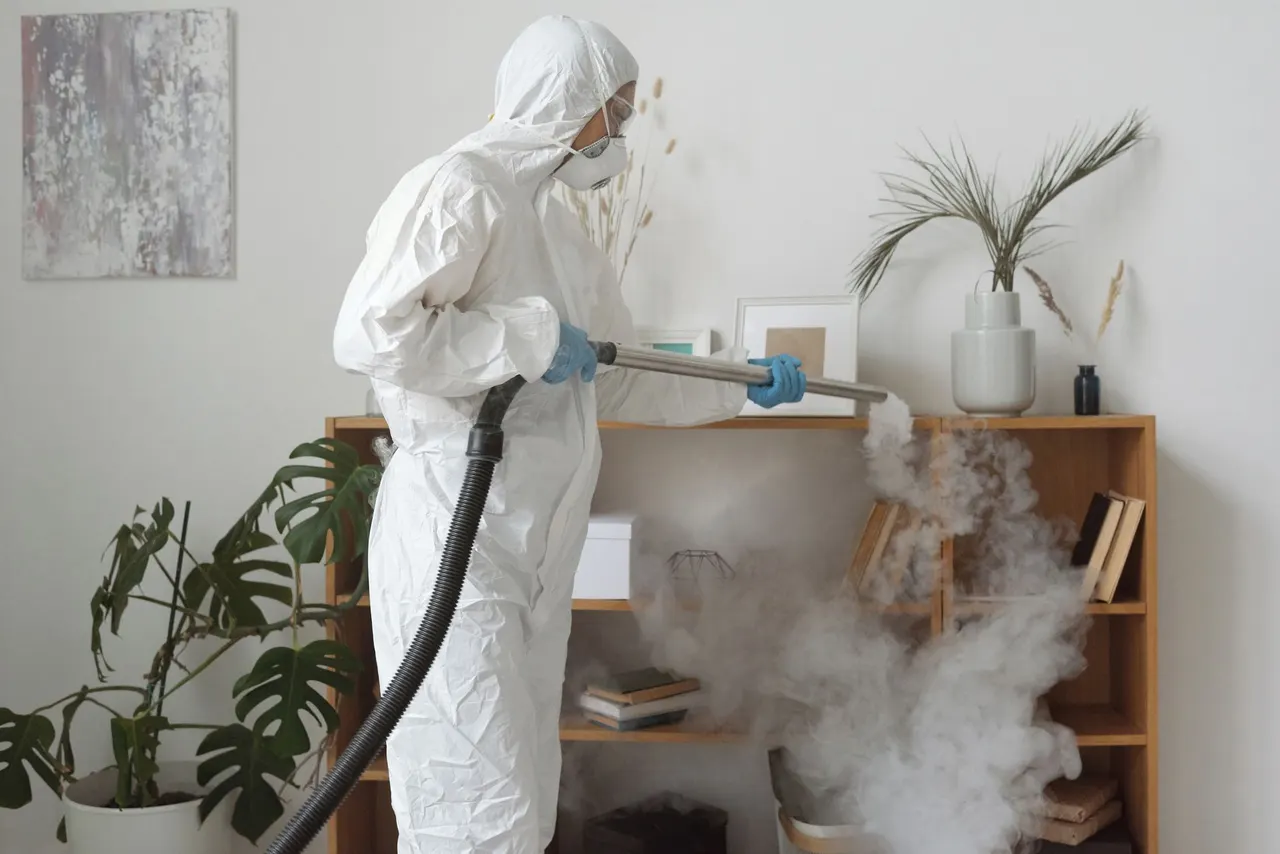
Poly sheeting barriers, zipper doors, and negative air machines keep spores inside the work zone. Air scrubbers with HEPA filters run continuously during removal so the rest of the house stays clean.
Affected drywall, insulation, trim, and flooring come out. We bag and remove debris through the containment, not through your living room. Solid framing stays and gets treated.
Framing and solid surfaces get treated with antimicrobial spray, then an encapsulant coating where a long-term barrier makes sense. We use products like Concrobium and RMR-86 depending on the surface.
Dehumidifiers and air movers run until moisture readings return to normal for the assembly. We re-check with the meter and thermal camera and take clearance photos before we pull containment.
You get a summary of what was removed, what was treated, moisture readings before and after, and photos. It is written for your insurance adjuster, not for us.
The approach is the same for a home and a business. What changes is the access, the schedule and who needs the paperwork.
We handle mold in houses, condos, and rentals across Phoenix. You get containment, removal, treatment, and a written summary for your records.
We work with property managers and business owners on commercial mold jobs. Scheduling is built around your operating hours and documentation is prepared for your carrier.
A plain-language look at what Emergency Mold Removal involves and when it is needed.
See how it worksEmergency Mold Removal in Phoenix is the urgent containment, extraction, and remediation of active mold growth before it spreads through walls, ceilings, and ductwork. It is not a wipe-down. We set a containment barrier, run negative air machines with HEPA filters, and pull moisture readings with a moisture meter and thermal imaging camera to map where the water actually traveled. Growth that started behind a bathroom vanity often shows up 12 feet away under carpet padding, and the tools tell us where to cut.
Phoenix customers call us most often after a slab leak, a failed swamp cooler line, or a monsoon that pushed water under a stucco wall. In a 100-degree summer, mold can colonize a wet wall cavity in 24 to 48 hours, so waiting a week turns a small remediation into a full room rebuild. That is why we treat Urgent Mold Removal Phoenix calls as same-day work, not next-week scheduling.
Containment, removal, treatment, and documentation done in one sequence so the growth does not come back.
Five steps, no surprises. Here is exactly how a typical emergency mold job runs from the moment you call until we hand you the clearance documentation.
We ask what leaked, when it started, and whether you can see or smell growth. You get instructions on shutting off the water source, keeping people out of the affected room, and not running the central AC if you suspect HVAC mold. A crew is dispatched while we are still on the phone.
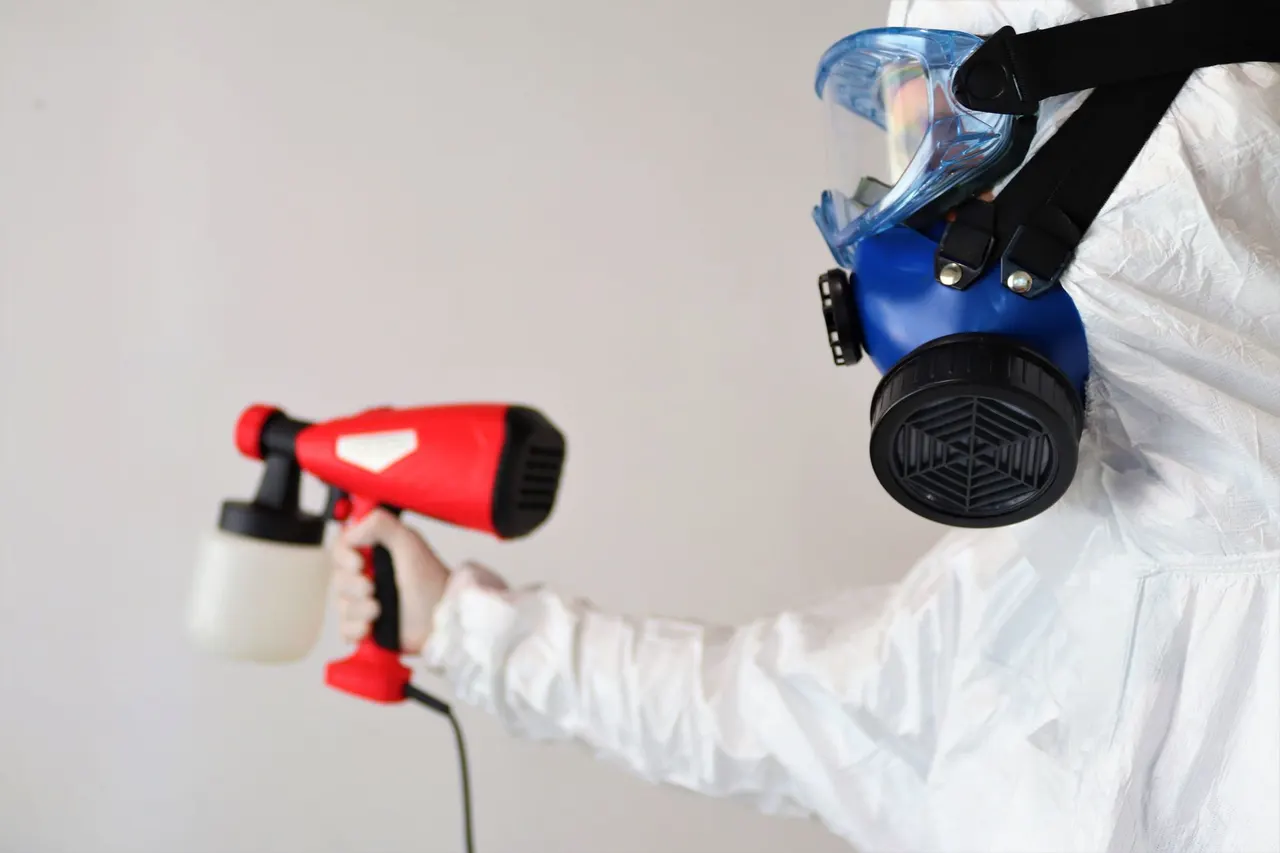
We walk the space with a moisture meter and thermal imaging camera, and use a boroscope to check inside wall cavities without cutting first. You get a plain explanation of what is wet, what is growing, and what has to come out. Most assessments take 30 to 45 minutes.
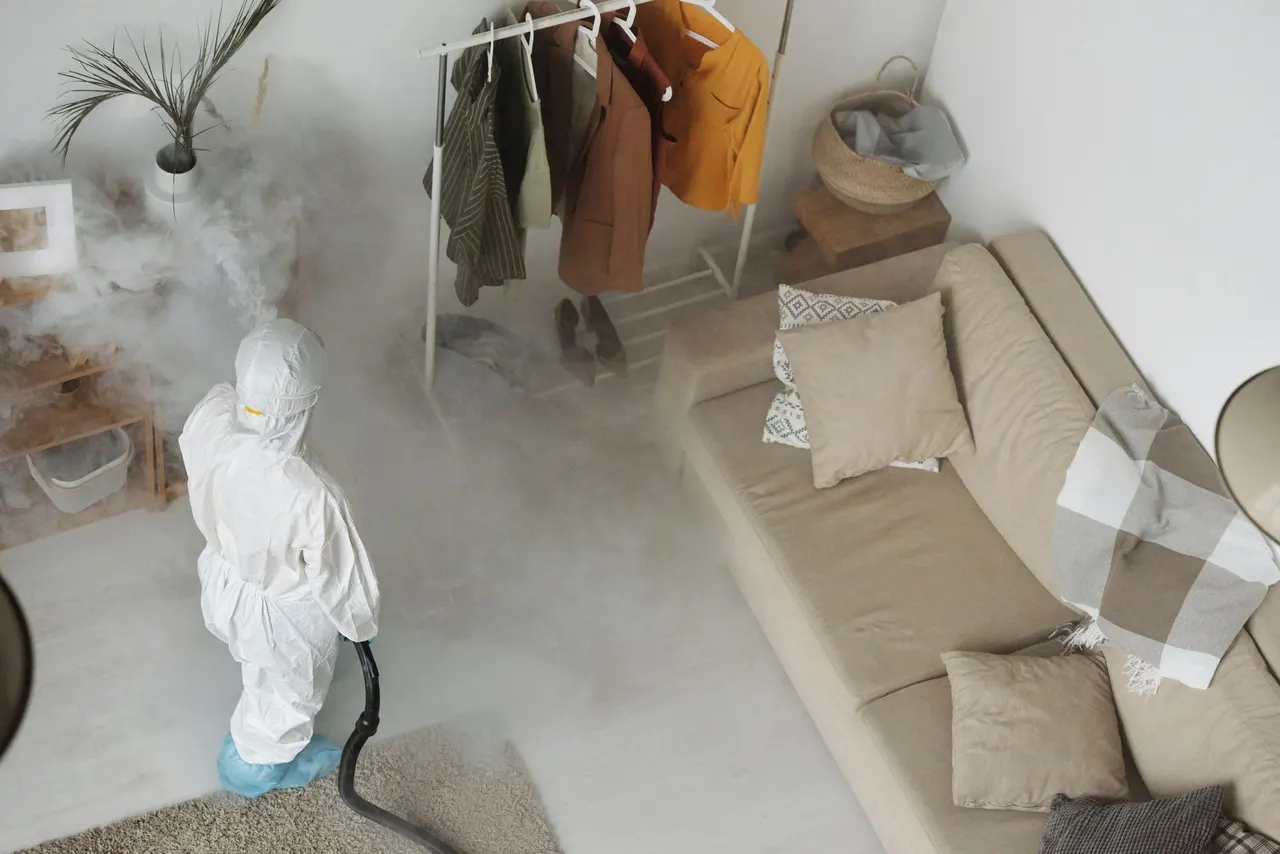
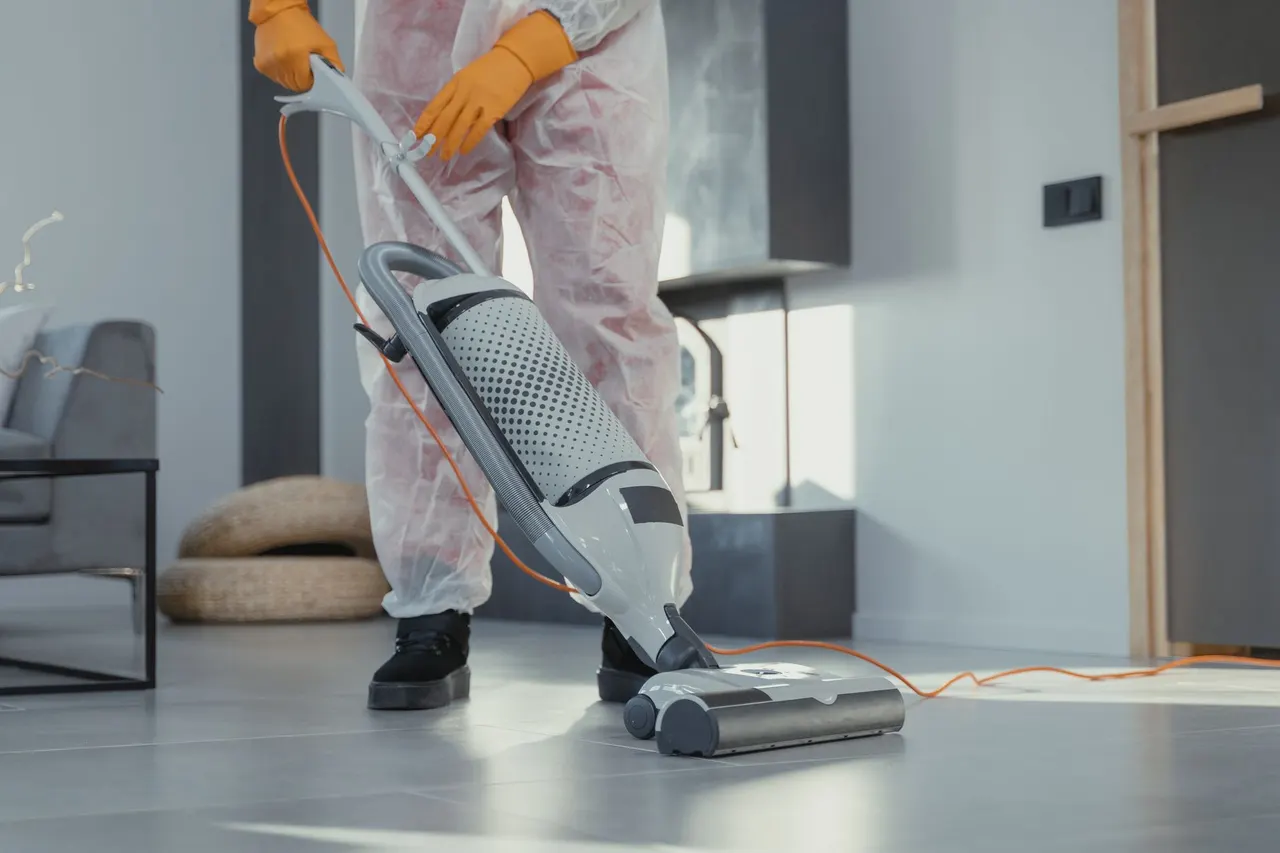
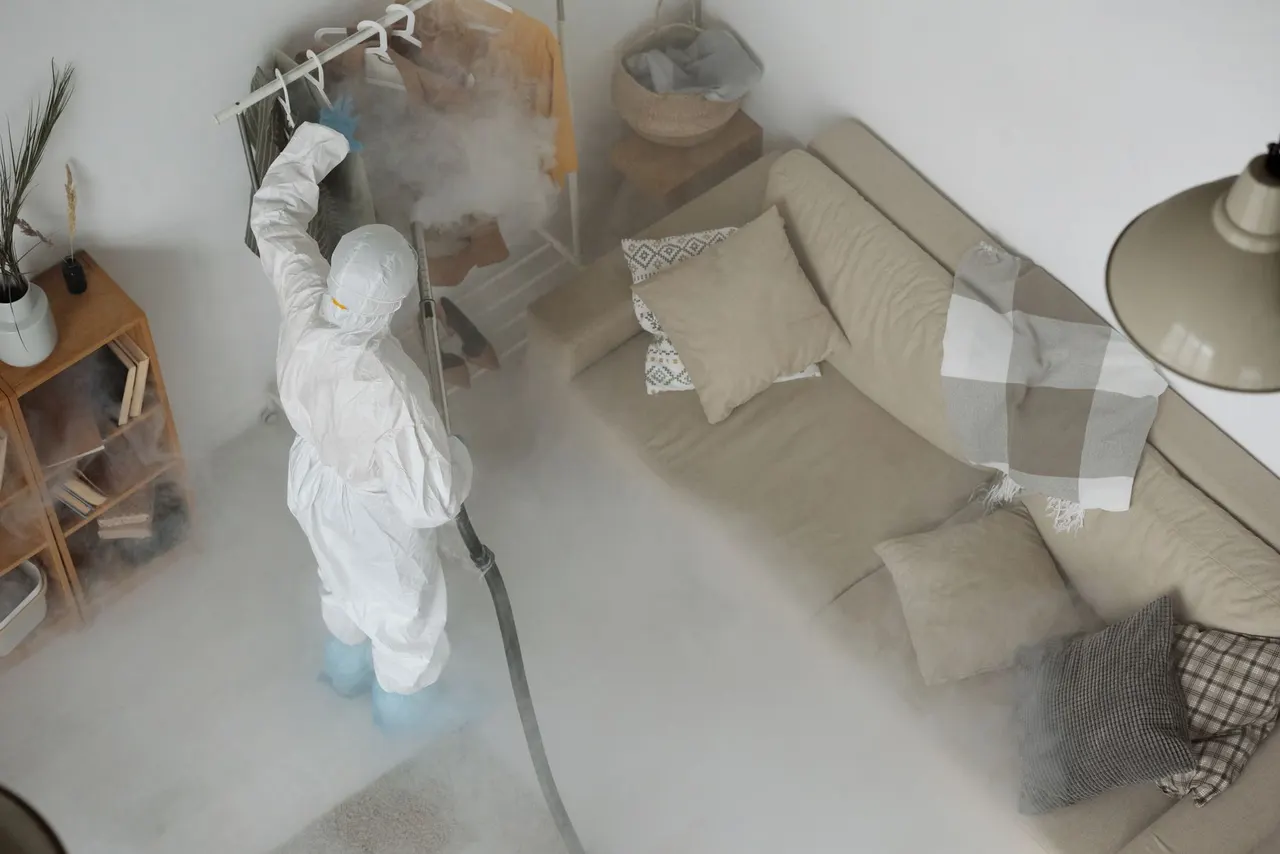
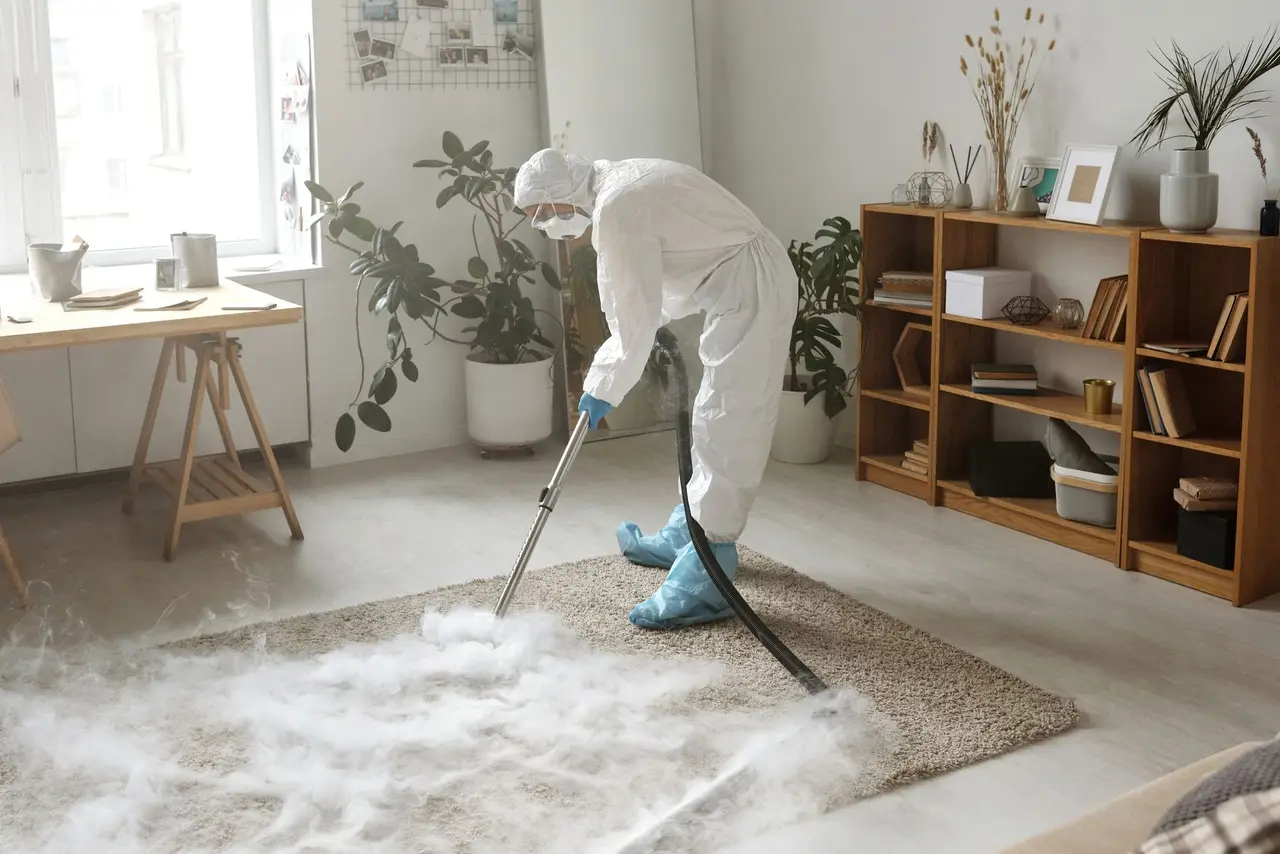
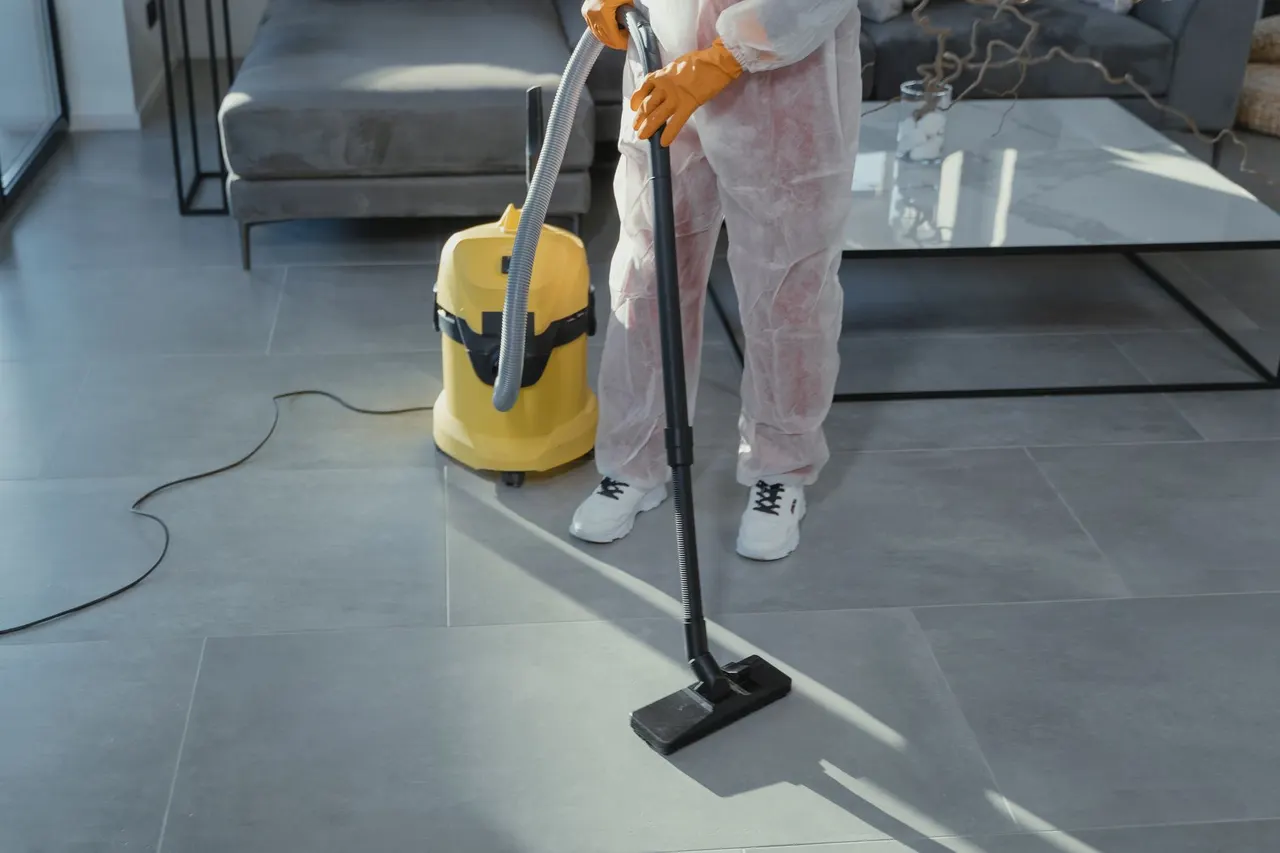
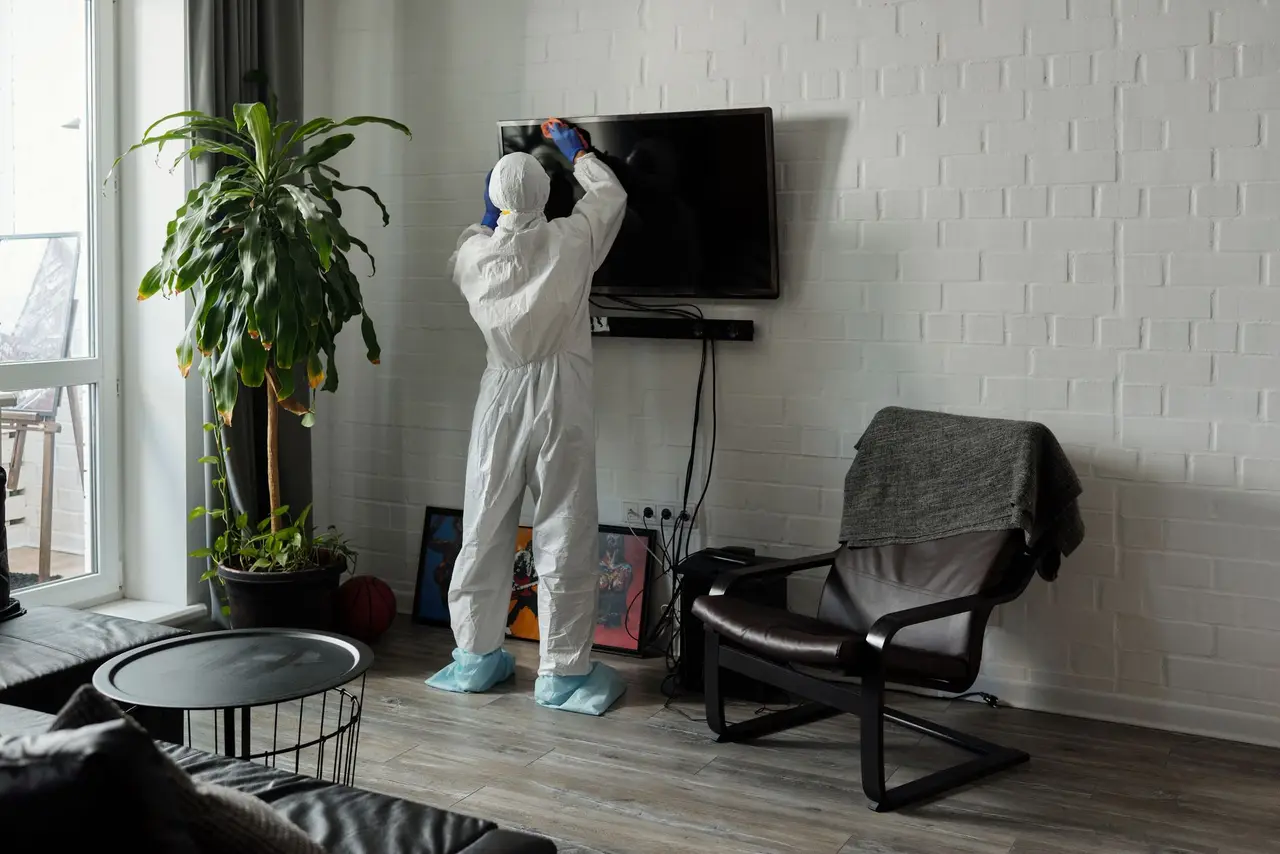
We set poly sheeting and negative air machines, suit up in PPE coveralls and N95 respirators, and remove affected drywall, insulation, and trim. Porous material comes out; solid framing gets HEPA vacuumed and treated with antimicrobial spray. This is the longest phase, usually one to three days.

Framing gets treated with products like Concrobium or RMR-86, then an encapsulant coating where we want a long-term barrier. Dehumidifiers and air scrubbers run until moisture readings return to normal for the building assembly, not just the surface.
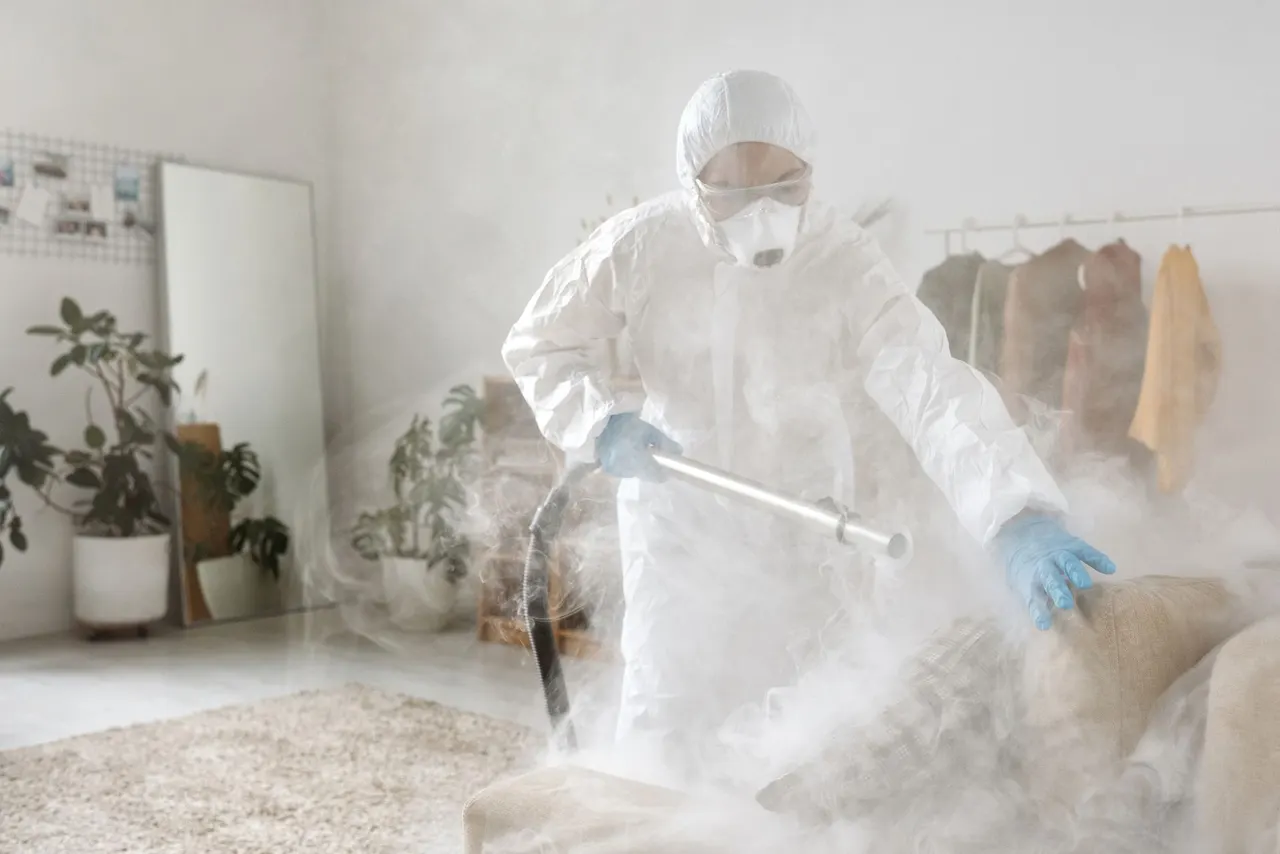
We re-check with the moisture meter and thermal camera, take clearance photos, and give you a written summary of what was removed, what was treated, and what to watch. If you want third-party clearance testing, we can coordinate it before we close the containment.
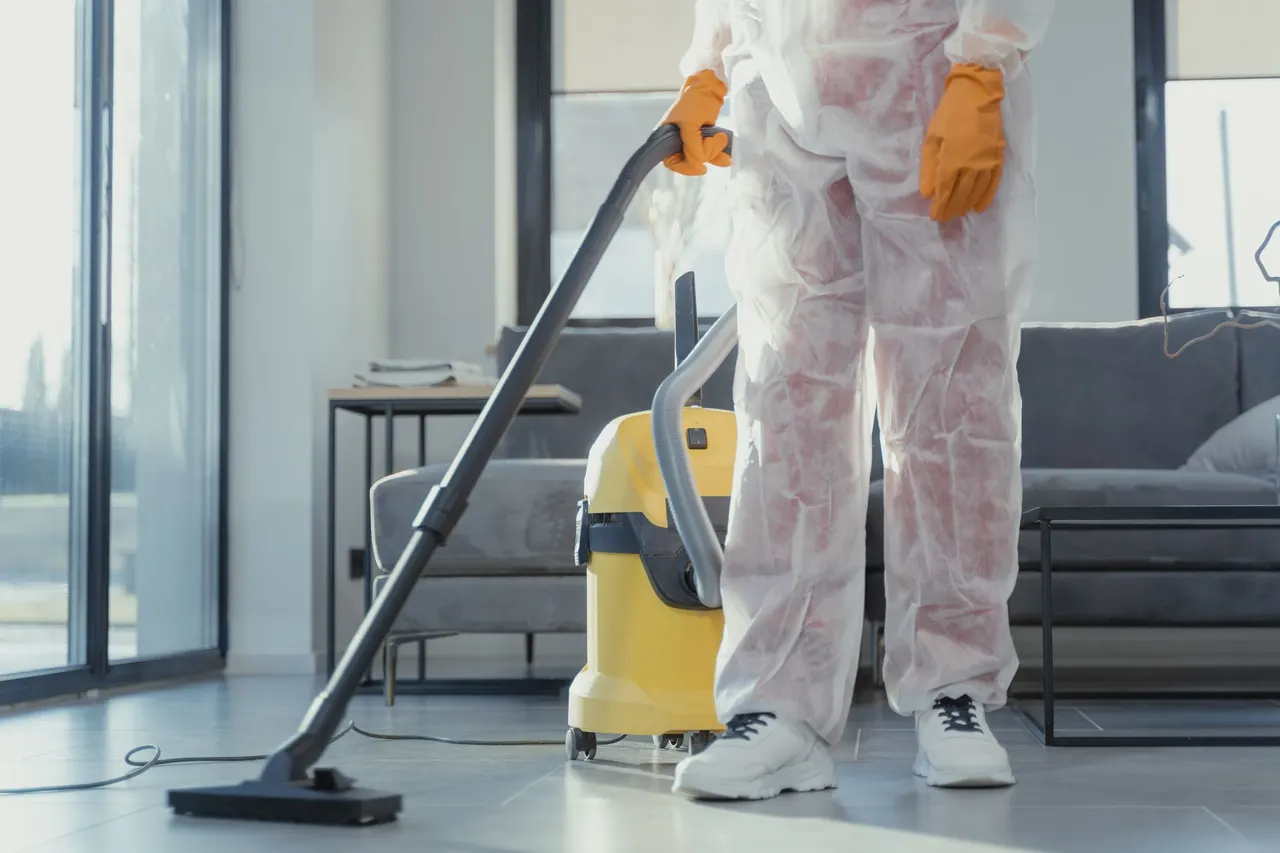
Move across a circle, or focus it and press Enter, for an illustrative thermal view of the photograph.
Reads moisture content in drywall, framing, and subfloor so we know exactly where the water went and when the assembly is dry.
Shows temperature differences behind walls and under floors, revealing hidden moisture without cutting first.
Lets us look inside wall cavities and ductwork through a small hole before committing to a larger opening.
Filters airborne spores continuously during removal so the rest of the home stays clean.
Creates negative pressure inside containment so air flows in, not out, keeping spores in the work zone.
Thermal views are illustrative, generated from the photographs.
Pull moisture out of the air and materials until readings return to normal for the building assembly.
Removes settled spores from surfaces and framing after removal, before treatment.
We follow the S520 framework for containment, removal, and clearance. It defines what counts as affected material and how it should be handled, which keeps the job defensible for insurance and future resale.
Containment goes up before any material comes out. Poly sheeting, zipper doors, and negative air machines are set first, then removal begins. This is the single biggest factor in keeping a small job small.
After removal, framing and solid surfaces get treated with antimicrobial spray, then an encapsulant coating where a long-term barrier makes sense. Products like Concrobium and RMR-86 are chosen based on the surface and the level of growth.
We do not pull containment until moisture readings return to normal for the assembly. Thermal images and meter readings are taken before and after, and the results go into your documentation.
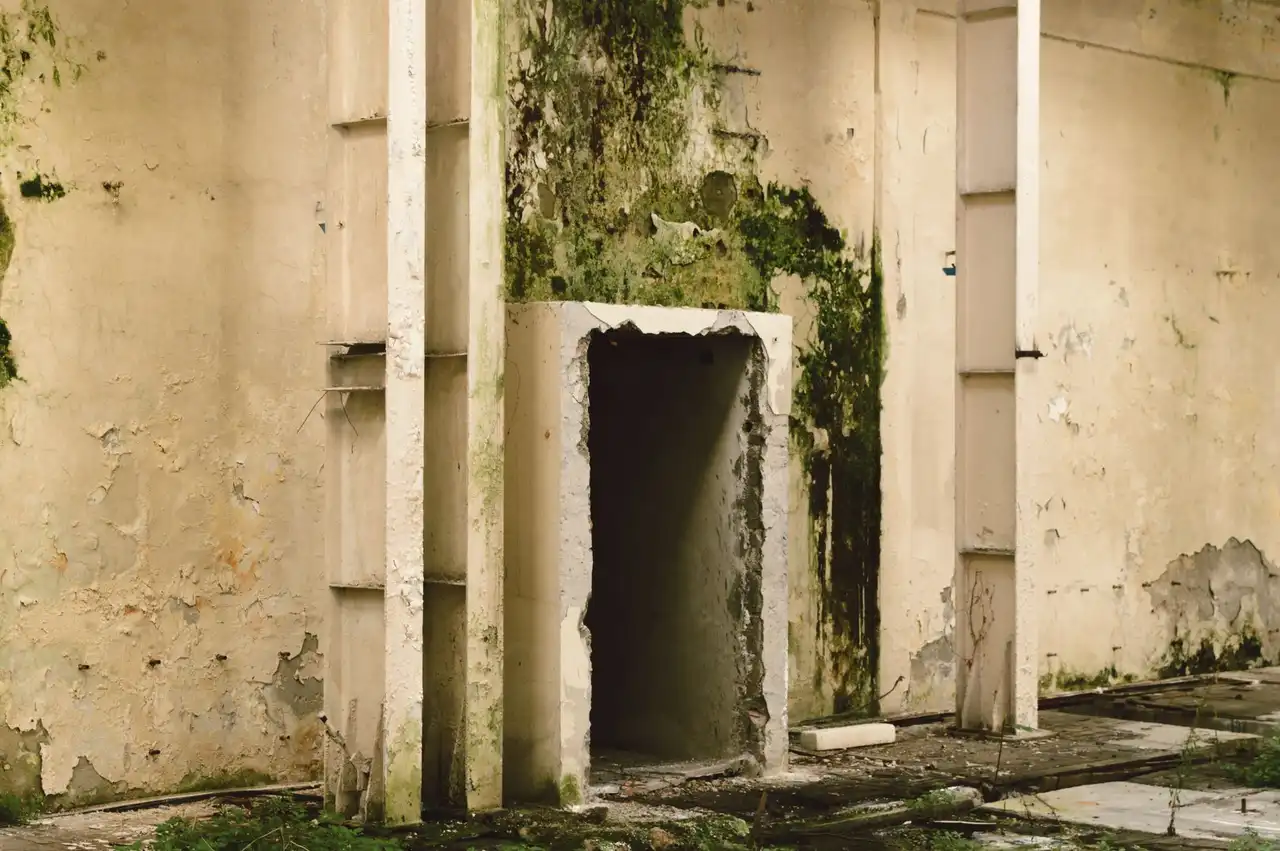
You found black mold growth behind a bathroom wall after a slow leak you did not notice for a week.
We contain the bathroom, open the wall to confirm the extent, remove affected drywall and insulation, and treat the framing. The moisture source gets identified and addressed before we close up.
Outcome: Growth stops spreading, the smell is gone, and you have documentation for your insurance claim.
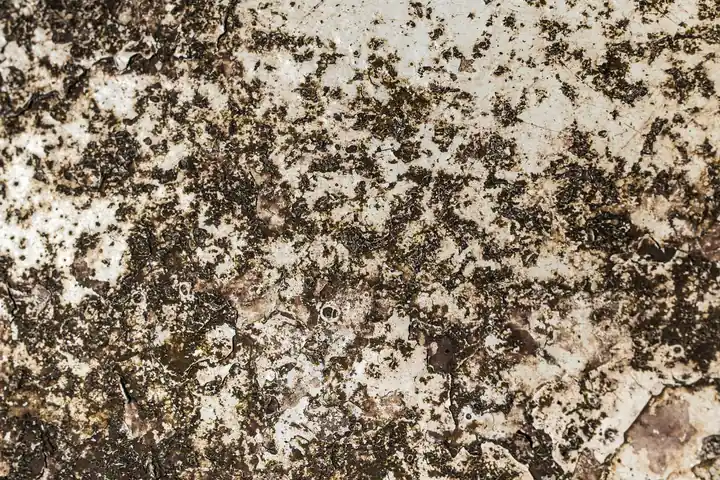
A monsoon storm pushed water under your stucco and you can smell mustiness in the room two days later.
We map the moisture from inside with a thermal camera, open the wall where readings are elevated, and remove affected material. Exterior drainage issues get flagged for your contractor.
Outcome: The wall cavity is dry and treated before the next storm, and the interior finishes can be repaired clean.
Your swamp cooler line failed overnight and the closet around it is wet and starting to smell.
We shut the unit down, contain the closet and connected ductwork, remove affected material, and treat the framing. If the plenum is contaminated, we coordinate duct cleaning.
Outcome: The cooler can go back into service without pushing spores through the house.
You are a landlord and a tenant reported a musty smell after a plumbing leak in a Maryvale rental.
We respond the same day, contain the affected room, remove growth, and document everything with photos and moisture readings. The report goes straight to your carrier.
Outcome: The unit is back to rentable condition and you have the paperwork to support the claim.
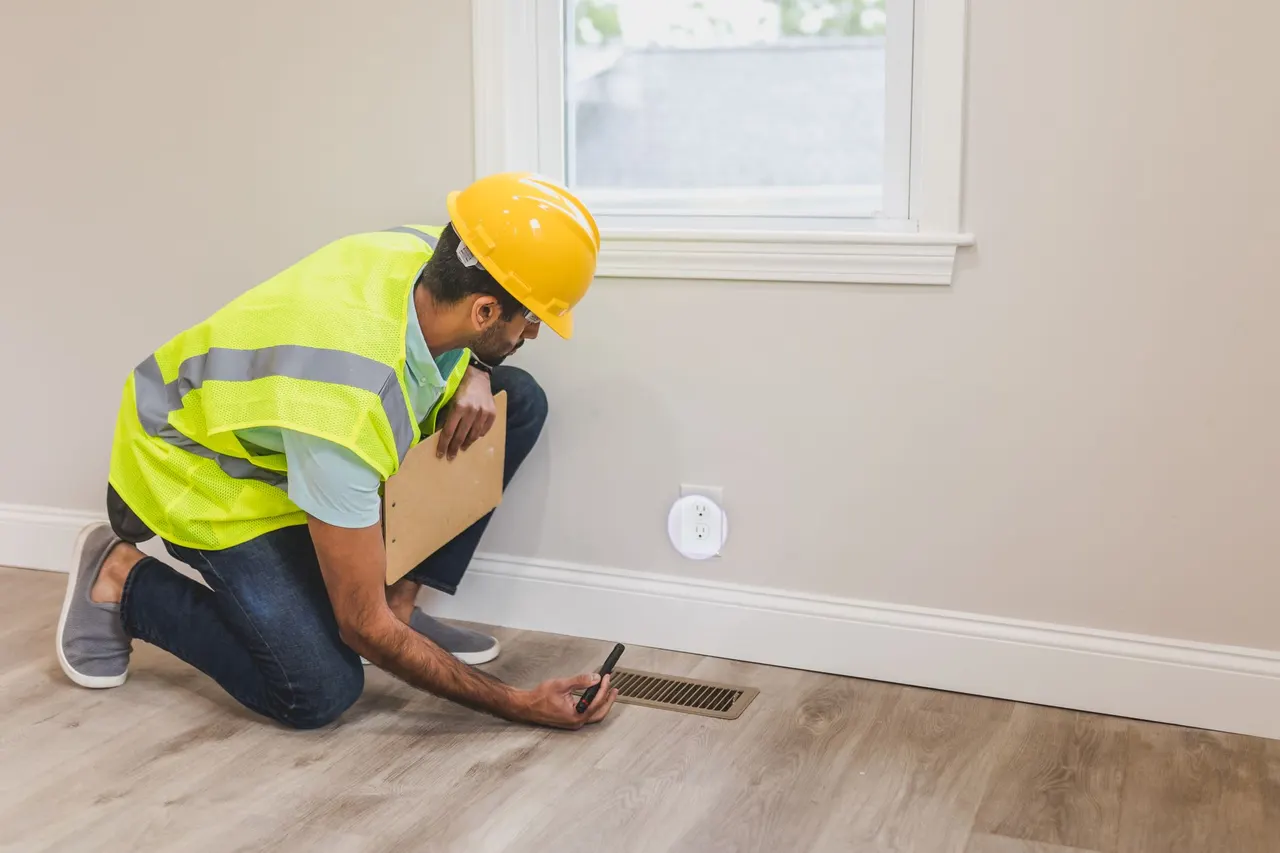
A commercial tenant in your building reported mold near an HVAC vent and you need it handled without shutting the floor down.
We contain the affected area, work around operating hours, and coordinate duct cleaning if the system is involved. Documentation is prepared for your property manager and carrier.
Outcome: The space stays operational and the contamination is removed to a documented standard.
Phoenix construction and climate shape every emergency mold job. Slab-on-grade homes hide leaks under flooring, stucco walls trap monsoon water, and swamp coolers feed moisture into ductwork all summer. When we respond to a Same Day Mold Removal Phoenix call, we already know the likely hiding spots for the era of home we are walking into.
Summer heat accelerates growth: at 100 degrees or more, a wet wall cavity can colonize in 24 to 48 hours, so we treat every active leak as time-sensitive. We work to Arizona ROC contractor standards and follow IICRC S520 for containment and clearance.
If you are searching for After Hours Mold Removal Phoenix AZ, we take those calls overnight and on weekends because monsoon storms and slab leaks do not check the clock.
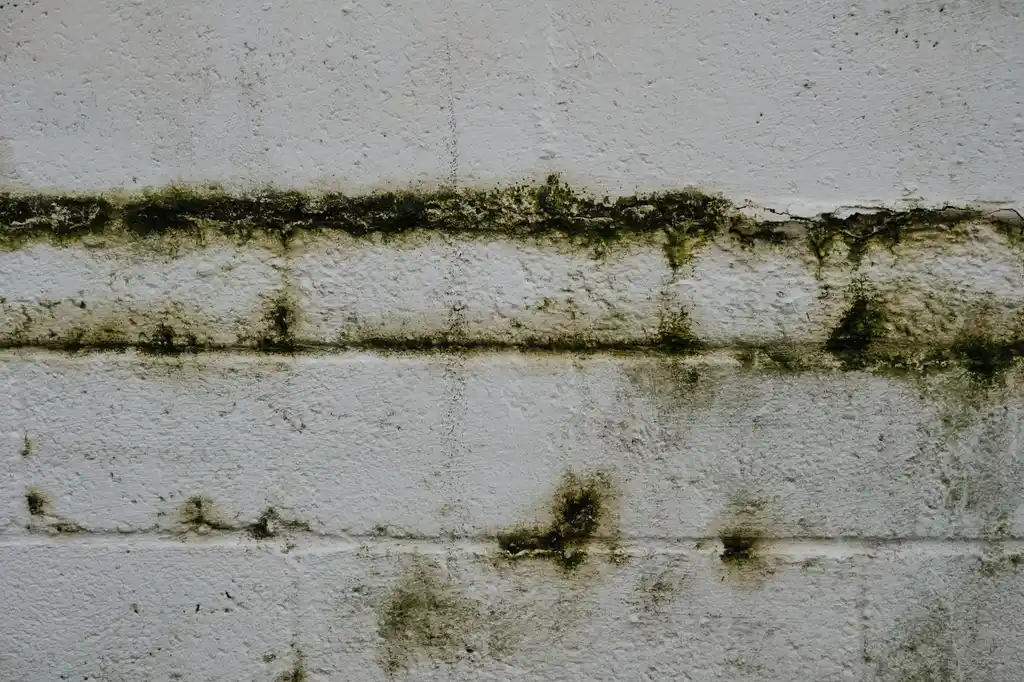
Before: A pinhole leak in a bathroom supply line had been wetting the wall for about two weeks. Black mold growth covered roughly 12 square feet of drywall and the stud bay behind the vanity. The homeowner noticed a musty odor before any visible stain.
After: We contained the bathroom, removed 12 square feet of affected drywall and insulation, treated the framing with antimicrobial spray, and applied an encapsulant coating. Moisture readings returned to normal in 48 hours. The repair closed clean and the leak was fixed the same week.
Check under-sink cabinets monthly for moisture and run the exhaust fan during every shower.
Before: A monsoon storm pushed water through a failed roof flashing in Deer Valley. Two weeks later, mold covered about 40 square feet of attic sheathing and had started into the insulation. The homeowner smelled mustiness in the hallway below.
After: We contained the attic, removed affected sheathing and insulation, HEPA vacuumed the framing, and treated with antimicrobial spray. The roof leak location was documented for the roofer. Moisture readings returned to normal in three days and the attic was closed out with clearance photos.
Have the roof inspected each spring before monsoon season and after any major storm. Attic ventilation matters in Phoenix; blocked soffit vents hold moisture and give mold a place to start.
Before: A failed swamp cooler pan in a Maryvale home had been feeding moisture into the ductwork for about a week. Mold was visible on the cooler housing and the plenum, and the musty smell was in every room when the cooler ran.
After: We shut the unit down, contained the cooler closet and connected ductwork, removed affected pads and pans, and treated the plenum with antimicrobial spray. The system went back into service with normal moisture readings and no odor.
Replace cooler pads at the start of every summer and check the pan for standing water weekly during heavy use. If you smell mustiness when the cooler runs, shut it down and call before the next cycle.
Most emergency calls come down to one of a handful of scenarios. Here is what we see most often in Phoenix and how we handle each one.
Growth stopped, space dried, and paperwork you can hand to your carrier.
We roll a containment barrier and start air scrubbing the same day you call in most Phoenix ZIP codes, including 85009 and 85003. Stopping cross-contamination early is the difference between cleaning one bathroom and remediating three rooms plus the HVAC system.
Every job gets moisture readings, thermal images, and photo logs before, during, and after. Adjusters process claims faster when the paperwork shows exactly where the water was and how much material came out. We hand you the file, you hand it to your carrier.
We build 6-mil poly sheeting barriers with zipper doors and run negative air machines so spores cannot drift into clean rooms. HEPA vacuuming and antimicrobial spray follow, then an encapsulant coating on framing that stays. The containment is not cosmetic; it is the job.
Phoenix stucco, slab-on-grade construction, and flat roofs all move water differently than a Midwest basement. We know where mold hides in a Maryvale ranch house versus a Camelback Corridor condo, and we cut accordingly instead of opening every wall.
Clear records you can keep and share.
Before, during, and after images
Moisture readings at each stage
What was removed and treated
Final readings and next steps
The size of the growth and whether the moisture source is still active decide how the work is scoped.
Small area on a non-porous surface
Growth in drywall, insulation, or padding
Growth in HVAC, attic, or crawl space
A list like this tells people straight away whether you cover their street. Not listed? Call and ask: it only takes a minute.
Based in Phoenix and covering the places around it. Pick one for local details.
Active mold growth on porous material, a musty odor with a known water source, or visible black mold growth larger than about 10 square feet is an emergency in Phoenix. So is any mold found after a slab leak, monsoon intrusion, or swamp cooler overflow, because the moisture source is often still active. If you can smell it but not see it, that is also worth a same-day call.
We target same-day arrival for calls placed before mid-afternoon, and we run after-hours and weekend dispatch for active water intrusion. Response time depends on your ZIP and traffic, but most Phoenix addresses see a crew within a few hours. We will give you a realistic window on the phone, not a vague promise.
Yes. Overnight and weekend calls are common after monsoon storms and slab leak discoveries. If you are not sure whether it can wait until morning, call and we will help you decide.
Shut off the water source if it is still running, keep people and pets out of the affected room, and do not run the central AC if you suspect HVAC mold. Do not bleach the surface or run a box fan across it, because that spreads spores. Take photos for your insurance file, then leave the containment to us.
Other services from the same team.
Active mold does not pause while you compare quotes. Call us, describe what you are seeing, and we will tell you honestly whether it is a same-day job or something that can wait until morning. We answer the phone, and we show up when we say we will.
Call 1234567890 or email info@azmoldremoval.com and we will get you on the schedule. We answer the phone during business hours, and if you leave a message after hours we call back the next morning. Tell us what you are seeing, smelling or feeling, and we will tell you what the next step looks like.